








Start gradually
Your first step can be a cold shower at home. In the water, start with a minute and build up slowly.
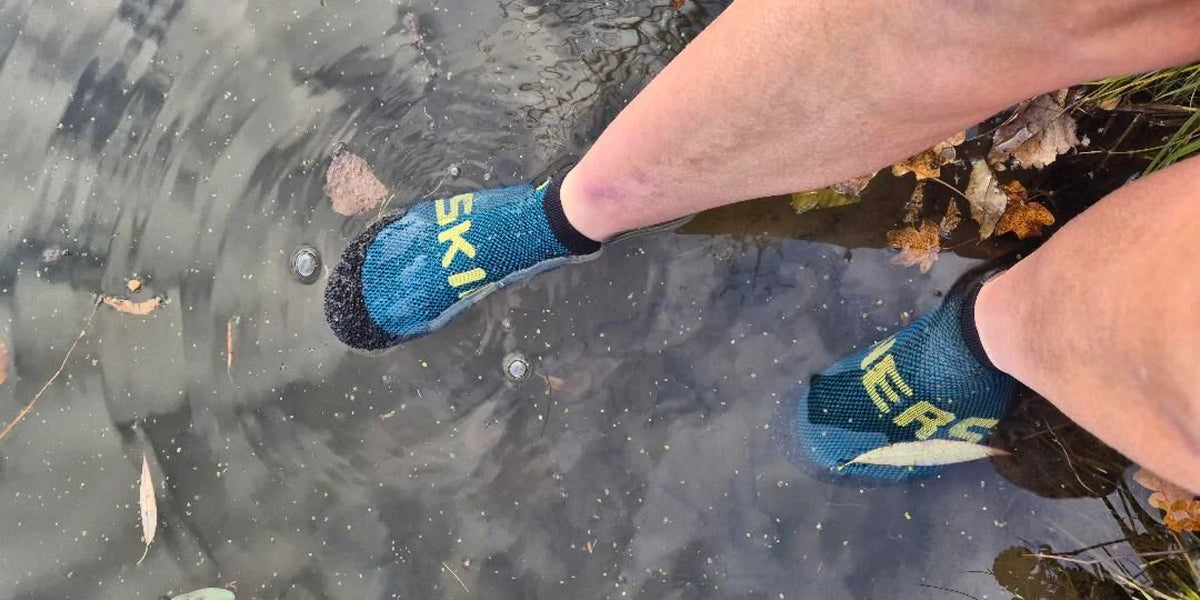
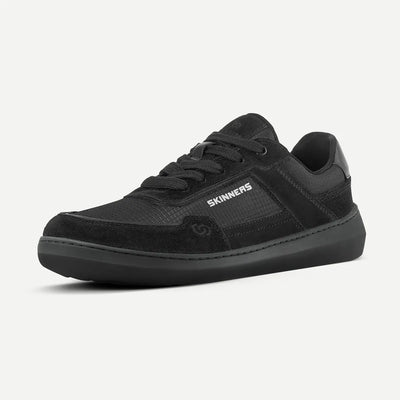
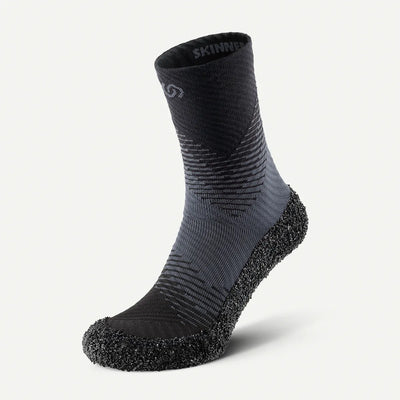
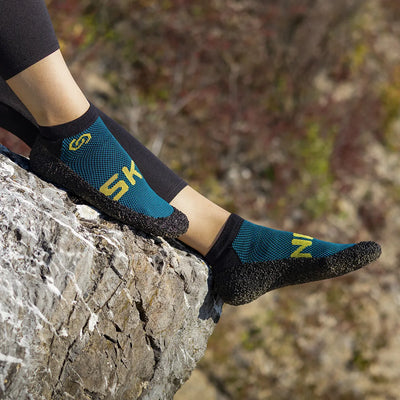
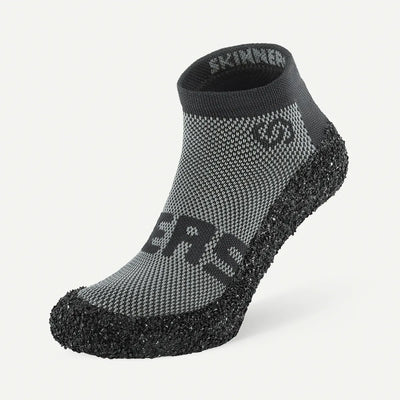
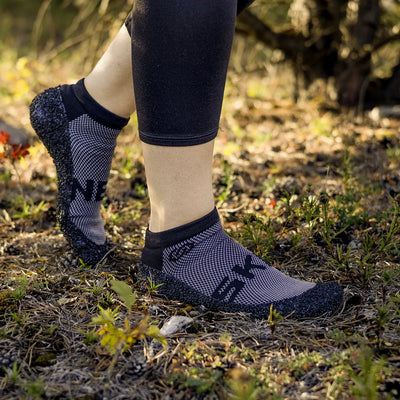
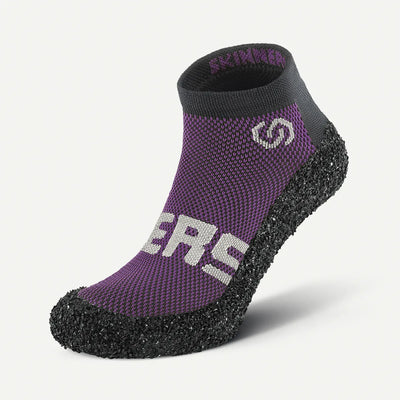
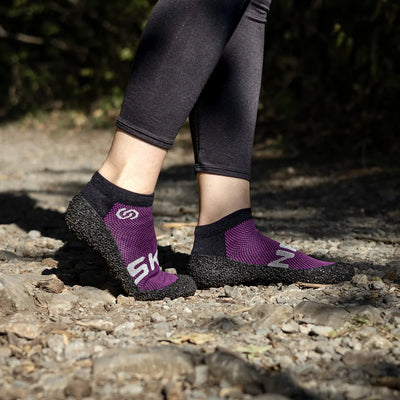
Into the water at an unfamiliar spot, down to the water over frozen grass or a snowy bank. Skinners sock shoes protect your feet, give you a surer step on a slippery shore and fit in your jacket pocket.

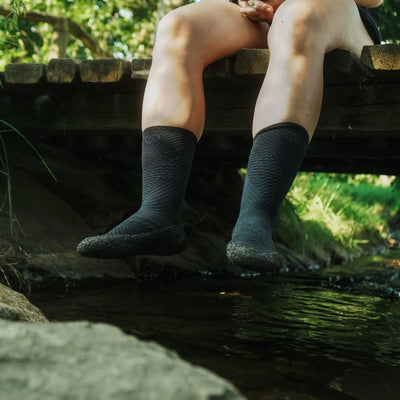
An unfamiliar pond, a rocky riverbed, the sea on a trip. When you don't know what you'll step on, sock shoes protect you from pebbles, twigs and other surprises on the bottom. They stay on in the water too, so you can focus on your breathing instead of every step.

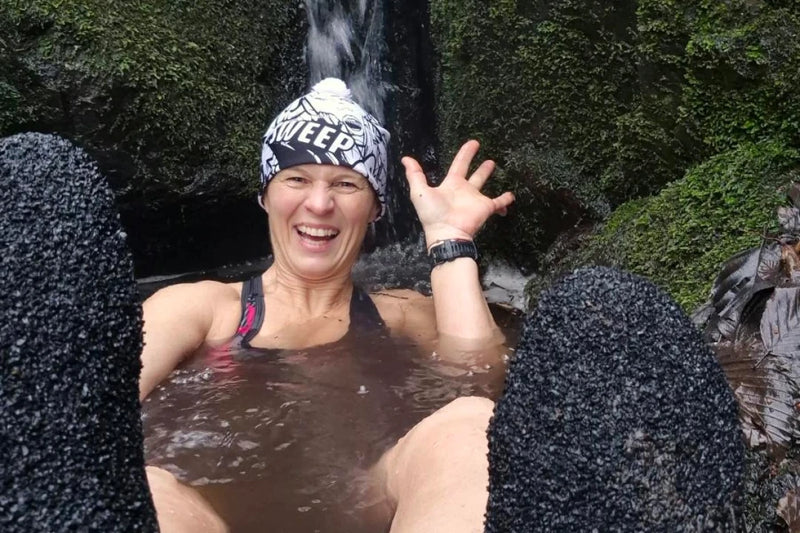
Have your favourite spot and go in barefoot? Sock shoes work as slip-ons from the car or the bench to the water and back. You slip them on in seconds, even on wet feet, and with numb hands after your swim there are no laces to deal with.

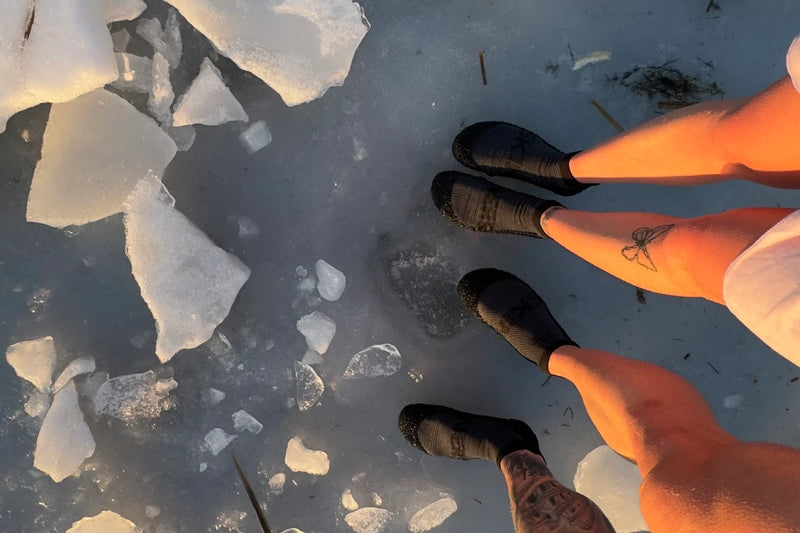
In winter, the shore itself is often the most slippery part. The non-slip sole gives you better stability and grip than bare feet or flip-flops, so you have a surer step on the short walk to the water over snow or to a hole cut in the ice. Still, tread carefully on ice – sock shoes are not crampons.

No laces, no zips. You can pull them on with numb hands over wet feet.

Better stability and grip on wet rocks, jetties and snowy paths.

Pebbles and twigs won't throw you off. And you still feel where you step.

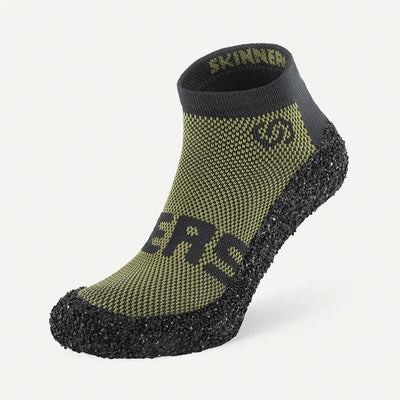
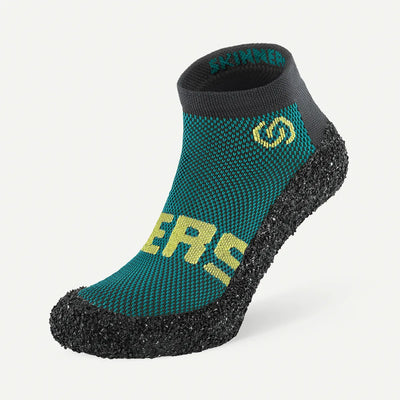
Mud from the bank is no problem. Wash your sock shoes as often as you need and dry them on a radiator.

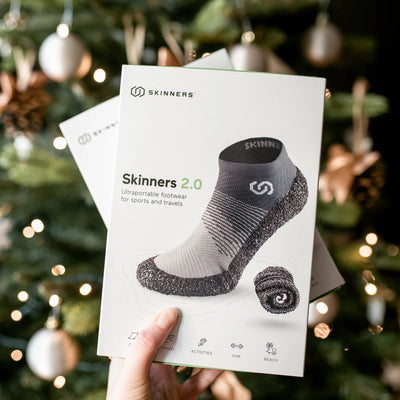
Put your wet sock shoes in the pouch and your bag stays dry.

They weigh next to nothing and even fit in a swim buoy.
“I take my sock shoes almost exclusively to the water, summer and winter. I can walk to the water any way and in any weather – over snow, rocks and mud. Then, depending on my mood, I either go into the water in them or take them off so I'm comfortable on the way back too.
After a winter swim my hands are frozen, so I love that there are no laces to deal with. They're light and fit nicely into my swim buoy. I rinse them often and they still look like new – and I've had my first pair since 2023.”
Ála Krumbholzová @ala_xtreme

Your first step can be a cold shower at home. In the water, start with a minute and build up slowly.
Swim with a buddy or a group, ideally in daylight.
Before you get in, find a safe way in and out, check the depth and whether there's a current.
Walk in step by step and let your breathing settle. Leave jumping into icy water to the experienced.
Hands and feet cool down fastest. When you start losing feeling in your fingers, it's time to get out.
Warmth returns to the body gradually. Have warm clothes, tea in a thermos and your sock shoes ready, so you're not standing barefoot on the cold ground.
If you have any health issues, talk to your doctor before your first cold-water swim.
No, they're not made of neoprene. They protect your feet and give you a surer step, but you'll still feel the cold water. That's the whole point, after all.
Yes. They stay on in the water and aren't heavy.
In the air or on a radiator. When they get dirty, just put them in the washing machine – you can wash them as often as you like. Until then, carry them in the waterproof pouch that comes in the box.
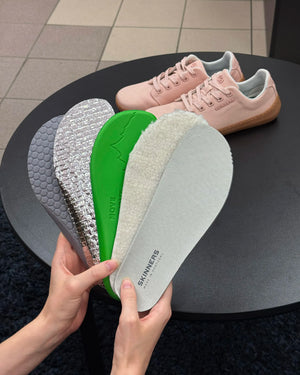
Whatever suits you. Without the insole, sock shoes are easier to pull on, especially over wet feet. But you can go into the water with the insole in too.
On the short walk over a snowy bank or to a hole in the ice, they give you better stability and grip than bare feet. But they're not crampons, so tread carefully on smooth ice.
Sock shoes should fit like a sock and shouldn't press at the toes. You'll find the right size in our size chart.
Absolutely. In summer people wear them as water shoes, on pebbly beaches and on trips.

This policy will take effect on 9 December 2024.
